
Aromatheraphy Massage
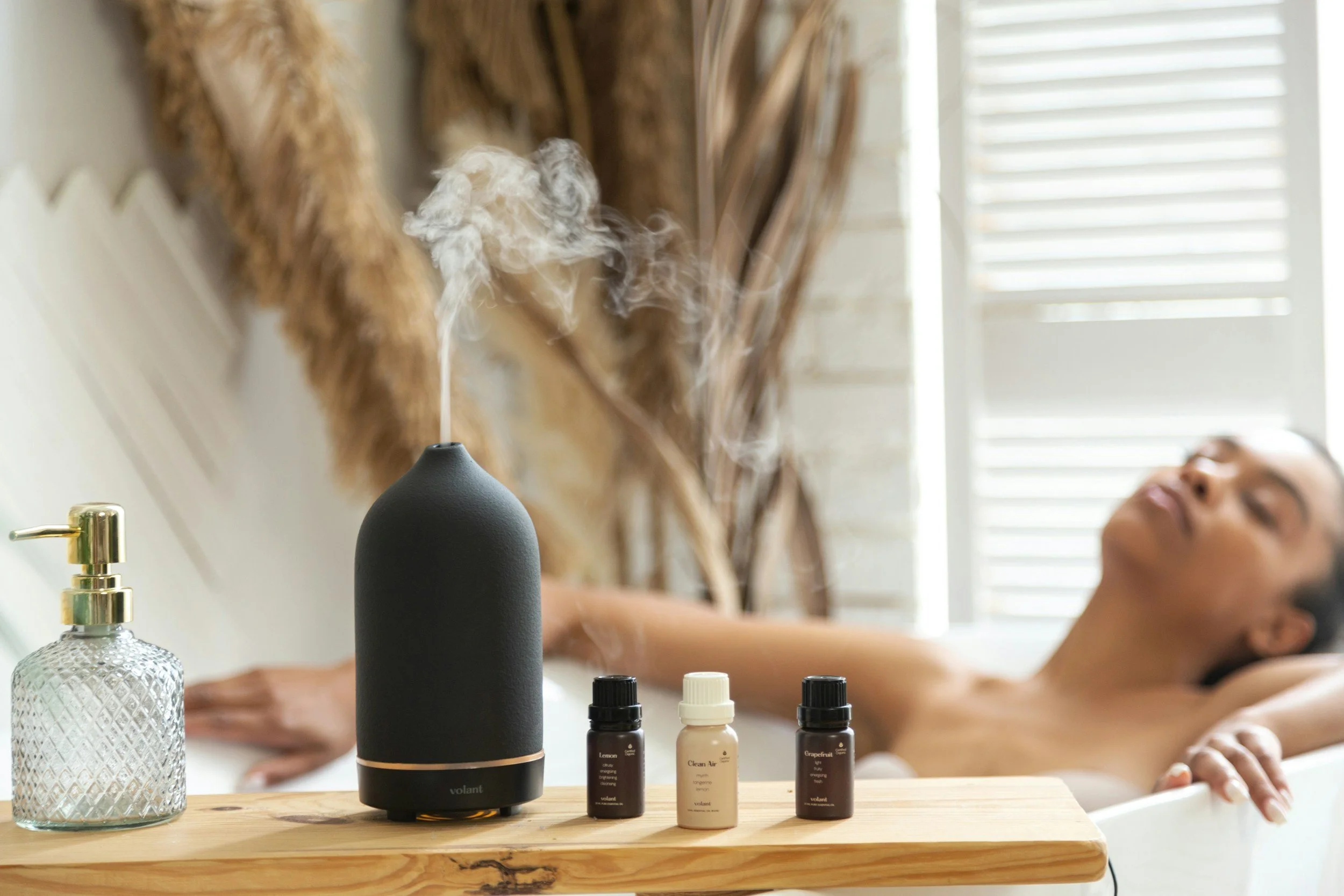
Recently I have had Psychologists referring patients in for Aromatherapy massage, which reduces stress while alleviating stress induced anxiety.
My morning was made when a patient walked in and exclaimed that her doctor has said she has "turned the corner!"
What is "Aromatheraphy Massage?" You ask?
I use Aromatheraphy Oils, specific to what you need the day you come in, and the oils actually boost your immune system and enhance mental, physical and emotional energy!
AROMATHERAPY MASSAGE
The Science Behind Scent, the Nervous System, and Hands-On Healing
I have been incorporating aromatherapy into my massage practice for many years, and the results I observe consistently in my patients go well beyond what most people expect when they hear the word. Aromatherapy is often dismissed as pleasant-smelling indulgence. What the clinical research actually shows is something far more specific — and far more powerful.
What Aromatherapy Actually Is
Aromatherapy is the therapeutic use of volatile aromatic compounds extracted from plants — their essential oils — to produce measurable physiological and psychological effects in the human body. These are not fragrances. They are concentrated biochemical compounds that interact directly with your nervous system through the olfactory pathway — the only sensory system in the human body with a direct neural connection to the brain.
When you inhale an essential oil, aromatic molecules travel through the nasal passage and bind to olfactory receptor neurons. These neurons send signals directly to the olfactory bulb, which has immediate projections to the limbic system — the part of the brain responsible for emotion, memory, stress response, and autonomic nervous system regulation. Within that system, the amygdala is the primary structure at work. The amygdala processes threat, fear, and emotional memory. It is also one of the primary triggers of the fight-or-flight stress response — the physiological state that keeps so many of my patients locked in chronic tension, pain, hyperreactivity, and fatigue.
Essential oils that activate calming olfactory pathways can directly downregulate amygdala activity and shift the autonomic nervous system from sympathetic dominance — fight-or-flight — toward parasympathetic dominance, which is the state in which the body heals, repairs, digests, and restores. This is not anecdotal. Published research in journals including the Journal of Alternative and Complementary Medicine and Evidence-Based Complementary and Alternative Medicine has demonstrated measurable reductions in cortisol levels, heart rate, blood pressure, and anxiety following aromatherapy exposure, with lavender, bergamot, frankincense, and clary sage among the most consistently studied compounds.
Some essential oils also contain compounds — linalool in lavender, for example — that cross the blood-brain barrier and directly modulate GABA receptors, producing an effect on the nervous system comparable to certain pharmaceutical anxiolytics, without the dependency risk or cognitive dulling.
What I Choose and Why
I select oils specifically for each patient on the day they come in, based on what their body and nervous system appear to need in that session. There is no single formula I use on every person. A patient presenting with acute anxiety and adrenal exhaustion receives a different blend than a patient dealing with chronic pain and inflammatory tissue damage. A patient recovering from grief or emotional trauma receives a different combination than an athlete in recovery.
Some of the oils I work with most frequently in clinical practice:
Lavender — Broad-spectrum calming. Lowers cortisol, reduces pain perception, promotes parasympathetic response. Consistently supported in clinical literature for anxiety and sleep.
Frankincense — Deeply grounding. Shown to modulate inflammatory cytokines and support immune regulation. Particularly valuable for patients carrying significant emotional or stress burden.
Bergamot — Uplifting and regulating. Research has demonstrated significant reductions in anxiety and fatigue with bergamot inhalation. I use this frequently for patients with depression-adjacent presentations.
Peppermint — Stimulating and analgesic. Menthol activates cold-sensitive receptors that reduce pain signal transmission. Valuable in sessions addressing muscle pain, headaches, and sluggish circulation.
Clary Sage — Hormone-regulating and calming. Particularly relevant for female patients dealing with hormonal fluctuation, PMS, and perimenopausal symptoms. Has demonstrated direct cortisol-reducing effects in clinical study.
Eucalyptus — Anti-inflammatory and respiratory-opening. I use this in sessions where the patient presents with systemic inflammation, sinus congestion, or immune stress.
The Massage Itself
I am a licensed Medical Massage Therapist with over twenty years of clinical experience, and the massage I practice is not a standardized sequence of strokes. It is a clinical assessment and treatment that changes with every patient and every session.
When a patient comes in, I first evaluate their presenting concerns — where they are holding tension, what structures are restricted, what compensation patterns have developed, and what their nervous system is doing. That evaluation informs everything that follows.
The modalities I draw from are extensive, and I select from them based on what the tissue is telling me: Deep Tissue work for chronic muscular restriction and adhesion, Myofascial Release to address the fascial web that connects every structure in the body, Neuromuscular Therapy to interrupt the pain-spasm-pain cycle that perpetuates so many chronic pain patterns, Trigger Point Release to deactivate the hyperirretable nodules in muscle tissue that refer pain to distant sites, Lymphatic Drainage to reduce inflammation and support immune function, Active Release Technique for soft tissue injuries and nerve entrapment, Craniosacral Therapy for nervous system regulation and headache patterns, and Positional Release and Strain-Counter-Strain for acute and post-surgical presentations.
With aromatherapy integrated into this clinical work, the effect is compounded. The oils begin calming the amygdala and shifting the autonomic nervous system toward parasympathetic before my hands have done a single stroke. By the time I begin working in the tissue, the patient's nervous system is already beginning to release its grip — which allows the manual work to go deeper, produce longer-lasting change, and require less force to achieve meaningful results.
I have had psychologists refer patients to me specifically for aromatherapy massage when the body has been so locked in sympathetic overdrive that talk therapy alone cannot access the level of regulation the patient needs. I have seen patients leave sessions reporting that their doctor said they had "turned the corner." I have watched people walk in with their shoulders at their ears and walk out with their nervous systems finally, genuinely quiet.
The oils set the stage. The hands do the clinical work. Together, they produce something that neither achieves alone.
→ Book your Aromatherapy Massage session with me at Superlative Health in Burke, Virginia →